
Support Payments, Filing Status, and Common Mistakes We See in the GTA
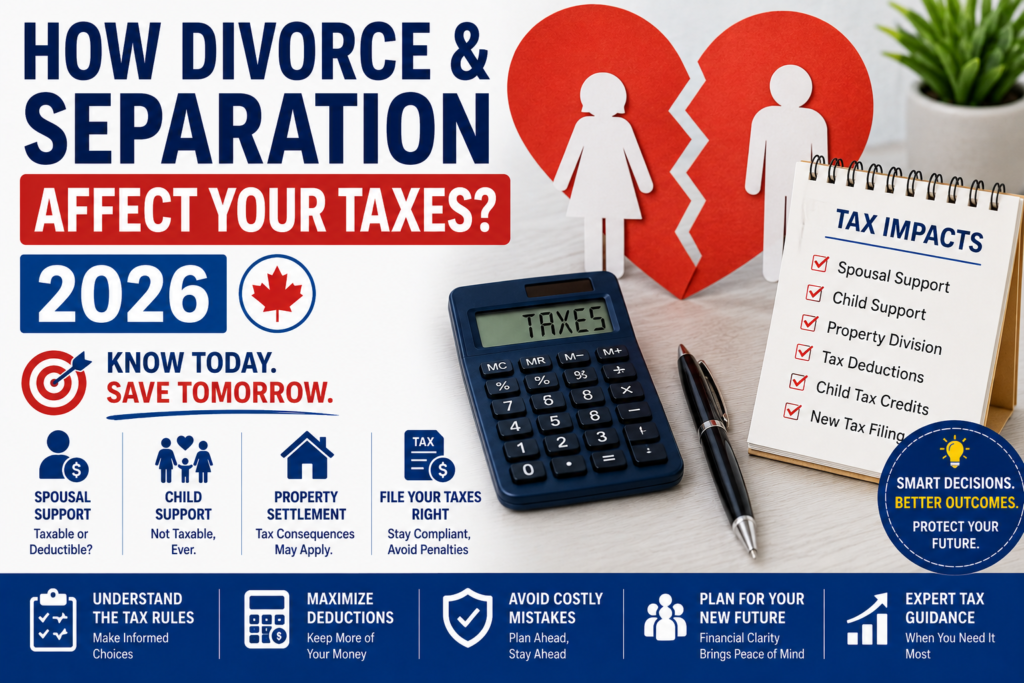
Divorce and separation taxes Canada guide by Easy Tax Canada, accountants in Mississauga and Brampton
Divorce and separation change more about your tax return than most people expect. Filing status, support payments, and who claims which credits all shift, and getting the details wrong can mean an unexpected CRA reassessment down the road. Here is what separating and divorced clients in Mississauga and Brampton need to know.
Spousal Support vs. Child Support: Very Different Tax Treatment
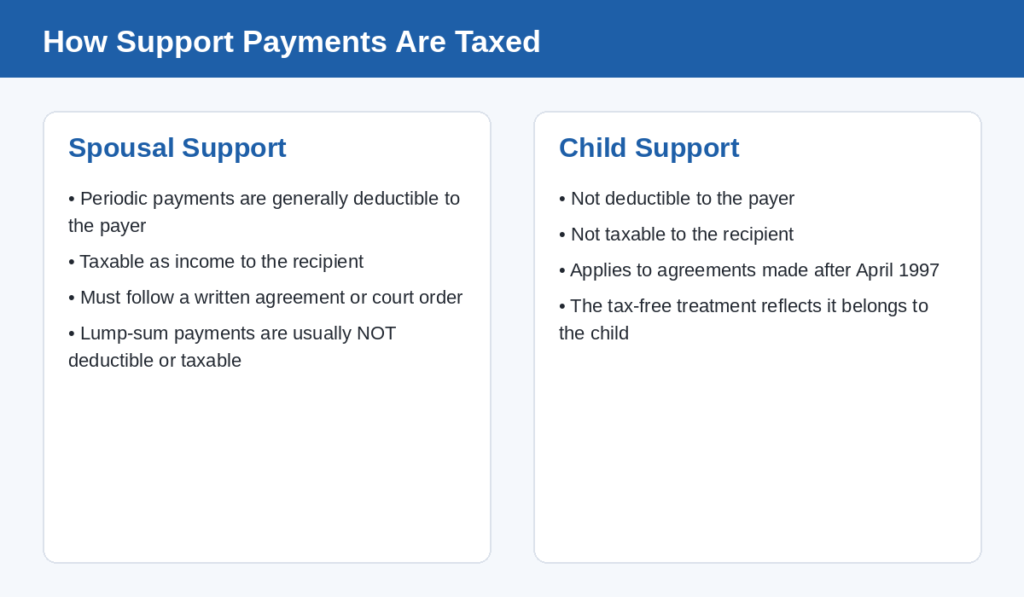
Comparison of spousal support versus child support tax treatment in Canada, Easy Tax Canada
This is the single most misunderstood part of separation taxes. Periodic spousal support payments made under a written separation agreement or court order are generally tax-deductible to the person paying and must be reported as taxable income by the person receiving them. Child support works in exactly the opposite way: for agreements made after April 1997, child support is not deductible to the payer and not taxable to the recipient, since it is considered to belong to the child, not either parent’s income.
| Lump-sum support payments are usually treated differently than periodic payments, and are often not deductible or taxable at all. If your agreement includes a lump sum, it is worth confirming the tax treatment before filing rather than assuming it follows the same rules as monthly payments. |
Updating Your Marital Status With the CRA
You are required to update your marital status with the CRA the month after your separation becomes official, generally once you have been living separately for 90 days due to a breakdown in the relationship. This affects your eligibility for benefits like the GST/HST credit, the Canada Child Benefit, and the Ontario Trillium Benefit, all of which are calculated based on household income.
Who Claims the Children?
- Only one parent can claim the Eligible Dependant credit for a given child in a given year, even in shared custody situations.
- Parents in a shared custody arrangement can often alternate who claims this credit year to year, based on their separation agreement.
- The Canada Child Benefit is typically split 50/50 in shared custody situations, each calculated using the respective parent’s own household income.
- Child care expenses can generally only be claimed by the parent who actually paid them and had custody at the time.
Dividing Property: What’s Taxable
Transfers of property between separating spouses under a written agreement can generally occur on a tax-deferred basis, meaning capital gains tax is not triggered at the time of transfer. However, this deferral does not eliminate the tax, it simply shifts the eventual liability to whoever holds the asset when it is later sold. This is an important detail to factor into any settlement negotiation, since two assets of equal current value can carry very different future tax bills.
A Common Mistake We See
We frequently see separated clients continue claiming credits or benefits based on their old marital status, either by oversight or because updating the CRA feels like one more administrative task during an already difficult time. This often leads to a reassessment and repayment demand later, sometimes for benefits received over a year or more.
Final Thoughts
Separation and divorce carry enough complexity without added tax surprises. Reviewing your support agreement, updating your CRA marital status promptly, and confirming who claims which credits each year can prevent a difficult financial season from becoming more difficult than it needs to be.
| Need Help With This? Talk to Easy Tax Canada. Our team is led by a former CRA Auditor and Collections Officer with over 15 years of experience, backed by CPAs who know the Canadian tax system inside and out. We help individuals, self-employed professionals, and small businesses across Mississauga, Brampton, and the Greater Toronto Area file accurately, plan ahead, and stay CRA-compliant year-round. Visit easytaxcanada.com to book a consultation or explore our blog for more tax guidance. |